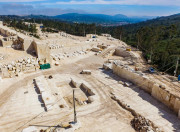

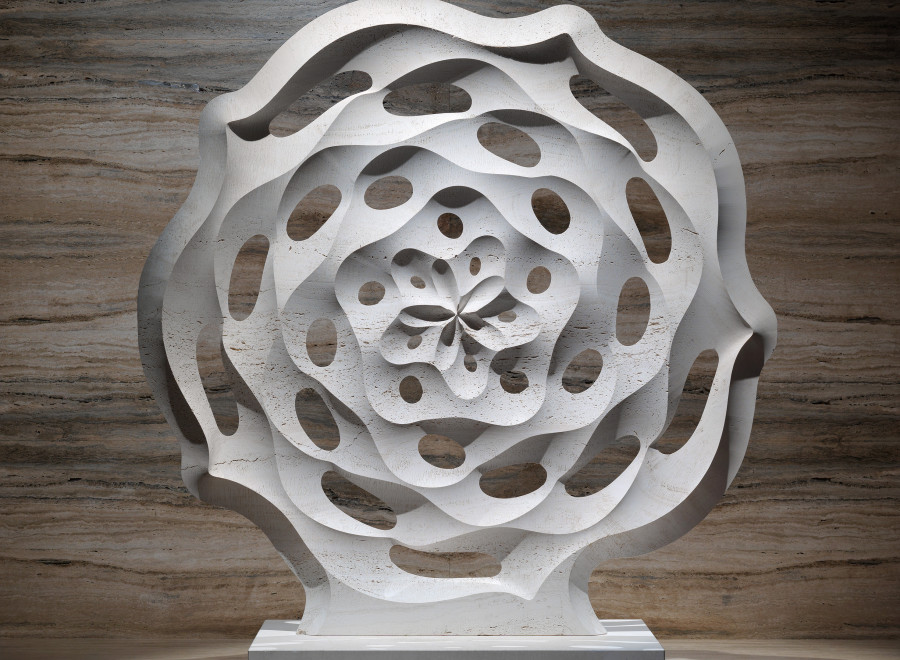
Today, thanks to computerized parametric programs and digitally controlled machines, we are now able to process stones by reducing waste, cutting them meticulously without them. I have used this method for years because I believe it is the best way to work with stone. In addition, we are just at the beginning of the journey!
Report: Ersin BOZKURT
Raffaello Galiotto is one of the most important designers of today's world.
Perhaps the most important thing that distinguishes him from other designers is Galiotto's special interest in natural stone.
StoneTimes asked about Galiotto's view of natural stone for you…
-We see you in the area where products are exhibited at the Marmomacc Verona Fair since 2006. Do you also have a specific interest in natural stone?
I am a designer working with different materials, but I must say that I have a special interest in natural stones. Artificial materials, which are typical of the modern age and widely used in design products, have remarkable properties, but they also lack certain properties of stones. Naturalness, time, region, human culture and its bond with traditions are aspects that characterize natural stone and greatly distinguish it from artificial materials.
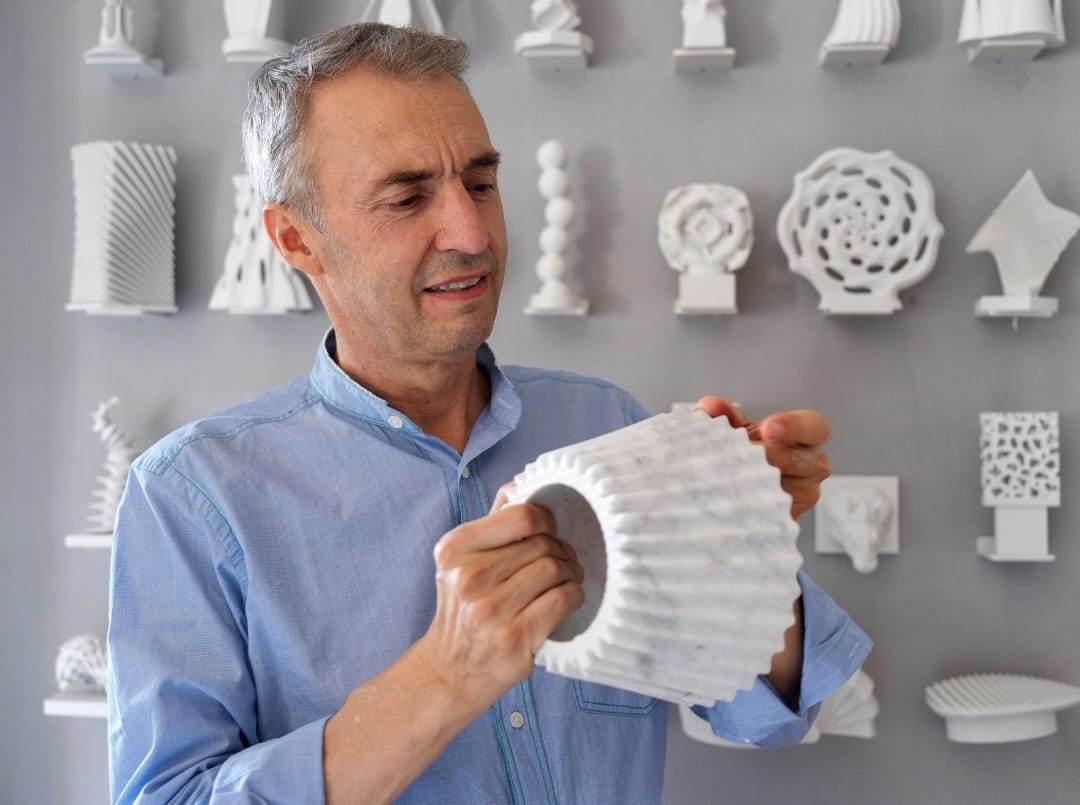
Stone; Its connection with nature and its spontaneous power surprises me.
While working with stone, you connect with ancient tradition and ancient knowledge on one hand and you give the stone the opportunity to renew its vitality with the use of the most modern technologies on the other hand. Natural stone is a material that continues to amaze me with its spontaneous power and its connection with nature, which is a proof of perfection.
-Natural stone is a product that does not bend like other industrial products and you cannot add on it. Does this cause problem for you during the natural stone production phase?
Natural stone has an endless variety and each stone has its own characteristics. All these features need to be well known in order to be able to choose the most suitable one for a particular project at a given time. Due to the unique challenges and conditions of working with natural stone, in many cases the designer chooses to imitate lighter and more flexible alternativematerials with the material at hand, rather than creating specific conditions to work with it.
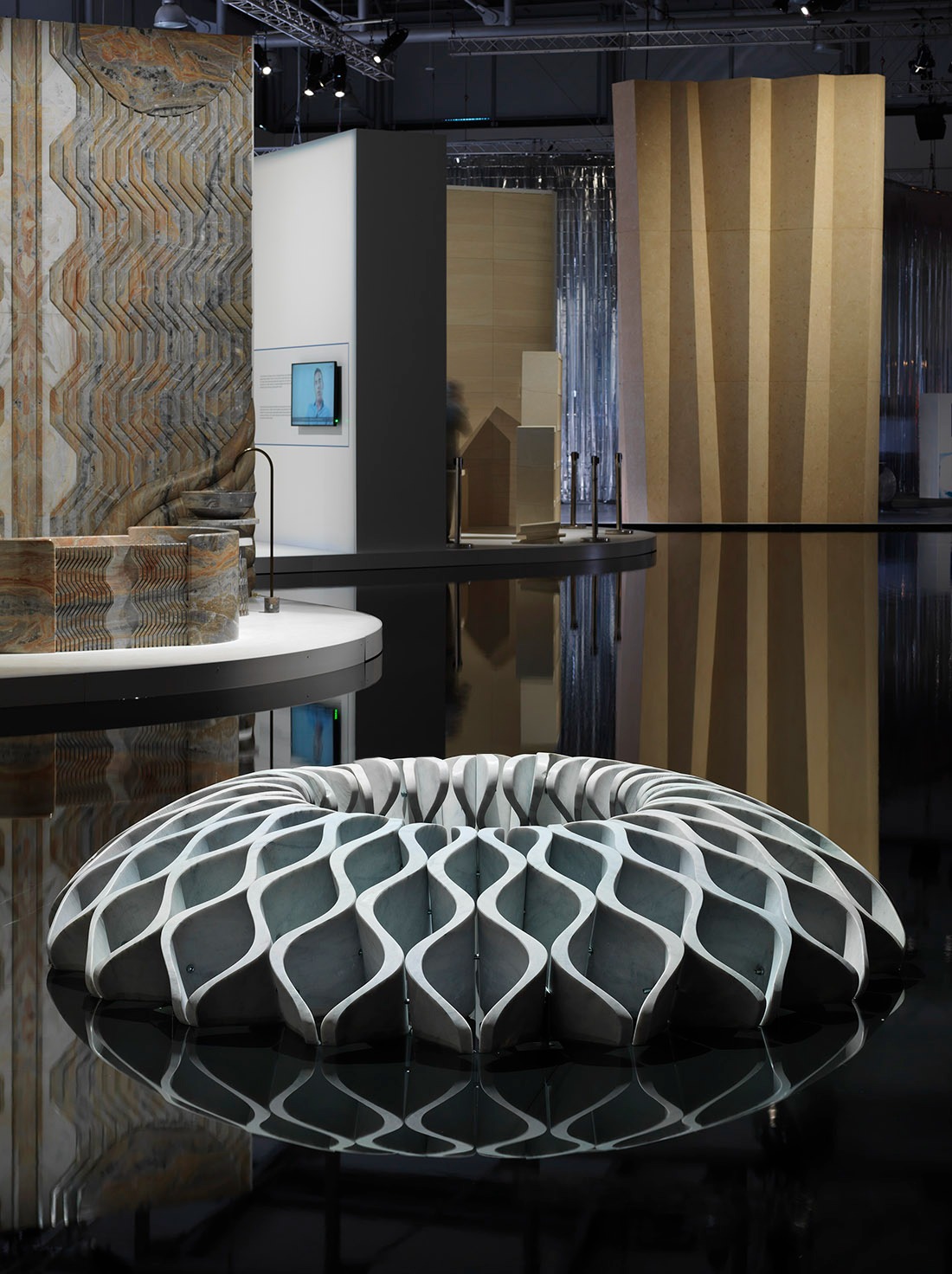
“The pursuit of extreme thinness makes stone lose shape!”
Density, stability, durability are the elements that have made the stone famous and known for thousands of years. Unfortunately, in today's world of consumption, even stone has had to yield to the ephemeral. The pursuit of extreme thinness caused the stone to lose its shape and replace the originality with artificial. All these developments lead to the emergence of imitations of natural stone using different production techniques. This causes natural stone to be mixed with its two-dimensional imitations.
-Which type of stones do you prefer in your designs?
I like to make experiments. Thus, encountering and exploring various types of stones is an interesting job for me. Although I do not like to put all stones in the same basket, I do not have a particular preference for a single stone. On the contrary, I believe that they should be differentiated and evaluated according to their different natures.
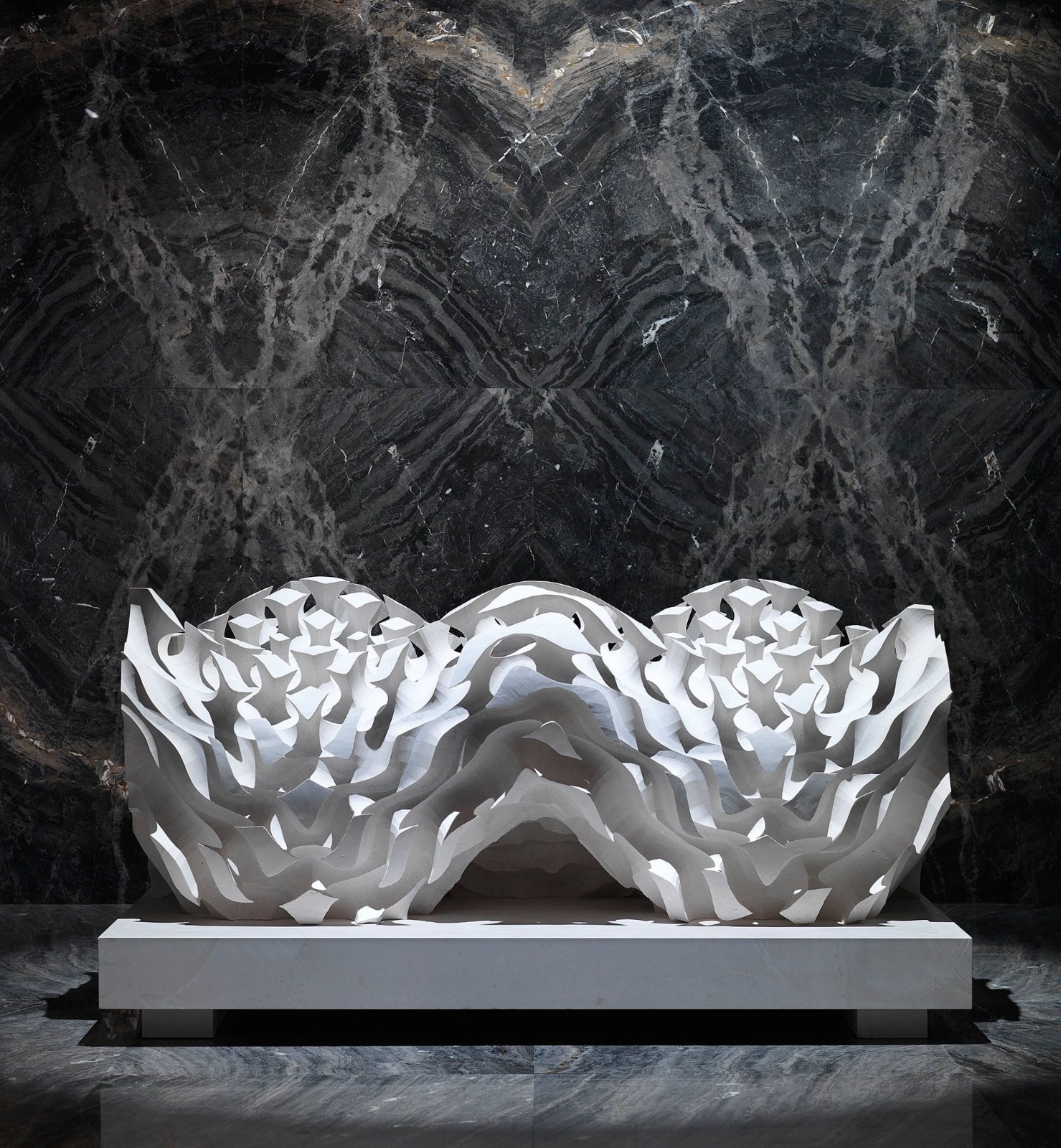
The stone tells us the diversity of our world
Natural stone, which is rich in color, pattern, hardness or fragility, local or exotic, tells us the diversity in our world. Therefore, I do not limit myself to a single type in my work.
—Have you received any demand for using Turkish natural stones in any of your designs?
No such request has yet been made. As an Italian, I admire the old Turkish marbles that I know from Italian monuments and cities. The ancient connection between Venice or Rome and present-day Turkey has somehow added value to these stones, raising them to world heritage level.
-Do you go to natural stone exhibitions held in other countries other than Verona Marmomacc?
Over the years, I have held stone design exhibitions in various parts of the world, from China to Morocco, and in various European states and Italian cities.
Stone is a kind of passport that unites everyone!
The products of the companies I work with are distributed all over the world. Natural stone is a kind of passport that unites everyone. I appreciate all placed in the world. However, the interesting aspect is not just the type of stone, but also the ability to process it, to interpret it in a new way. The digitization of the world offers us new opportunities to perpetuate this ancient material and pass it on to future generations. Today, thanks to computerized parametric programs and digitally controlled machines, we can process stones by reducing waste, cutting them meticulously without breaking them. I have used this method for years because I believe it is the most respectable way to work with stone. In addition, we are just at the beginning of the journey!
Who is Raffaello Galiotto?
Born in Chiampo (VI), in 1967. After studying Fine Arts in Venice, he founded his own design studio in 1993. He works as a product design, especially in the sector, combining the interest for research, materials, production processes and technology. Develops innovative experimentation and exhibition design events of international significance.
In the field of marble and natural materials, he obtained several awards for its work with major companies in the sector.
Moreover, 'professor of design at the University of Ferrara, his projects have been published in books and magazines and exhibited in international events and museum